

Shore power transformer
Everything about the shore power connection inland shipping: Costs, Regulations and Transformers
A shore power connection for inland shipping makes it possible to provide inland vessels with electricity while they are moored in the port, without using the fuel-consuming and noisy diesel generators on board. In essence: your vessel receives the required electrical power directly from the quay, via a safe and standardized connection with the port infrastructure. In the maritime sector, we often simply call this process 'plugging in'.
Integrating a high-quality shore power supply into your vessel is no longer a luxury today, but a technical and regulatory necessity. Especially within B2B shipping, panel building, and off-shore, we see that the transition to sustainable energy is accelerating rapidly. It offers you, your shipping company, and the environment numerous direct and measurable advantages:
Direct elimination of harmful emissions, such as particulate matter, nitrogen (NOx), and CO2, as long as your ship is at the quay.
A whisper-quiet power supply, which enormously improves the comfort of staying on board and prevents nuisance in inhabited port areas.
Significantly fewer running hours of your onboard generators; this not only saves expensive fuel but also significantly reduces wear and tear and expensive maintenance sessions.
A completely stable voltage, essential for the reliable operation of modern, sensitive onboard electronics and navigation systems.
How does a shore power supply work on a ship?
Customers regularly ask us: how does a shore power supply work on a ship in practice? The process is an interplay between the facilities on shore and the installation on board your vessel. The trajectory begins when your vessel is connected to power boxes or power columns on the quay. These port facilities usually offer single- or three-phase connections with an operating voltage of 230V or 400V. This current is brought on board via a certified heavy power cable to a special connection point.
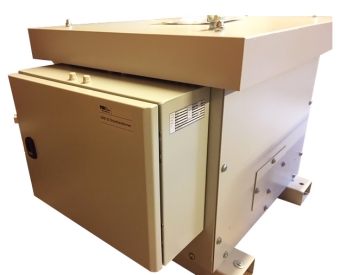
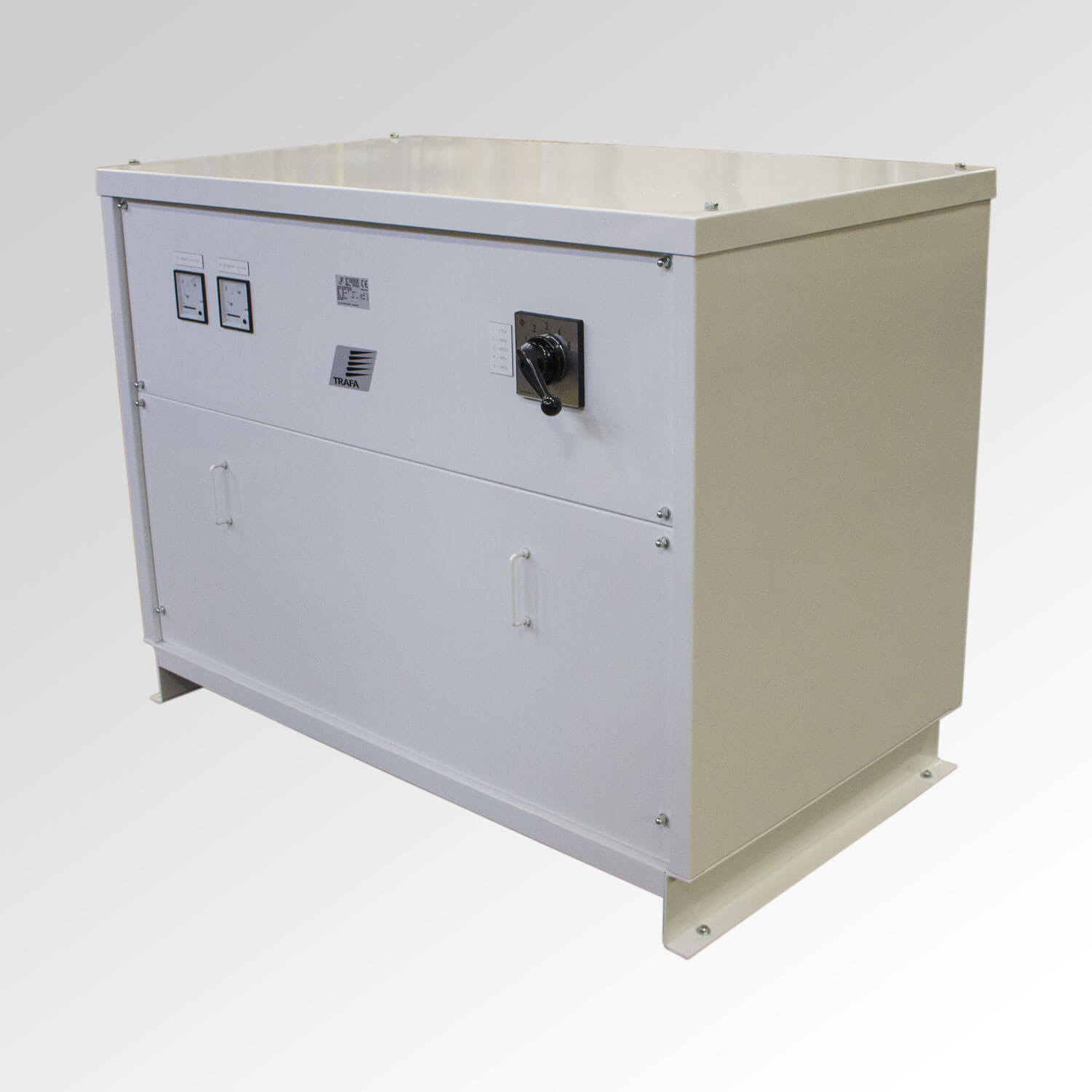
The absolute heart of this system, the component where no concessions may be made, is the isolation transformer (shore power transformer). When we look at the operation of this, this device is the ultimate gatekeeper of your onboard grid. The transformer takes the AC voltage from the shore and transfers it via a magnetic field (without physical wire connection) to the electrical grid of your ship. In addition to possibly converting the voltage (for example, from 400V on shore to 230V on board), its most important task is creating a galvanic isolation. The earth of the shore grid is thereby completely disconnected from the earth (the hull) of your vessel. Without this critical decoupling, the ship's hull, as well as the zinc anodes and propellers, are in serious danger of being affected by stray currents.
Isolation transformer or galvanic isolator: What is the best choice?
Confusion sometimes exists in the market: why use an isolation transformer instead of a shore power transformer if there are also cheaper alternatives? Often, people ask for the comparison: isolation transformer vs galvanic isolator. As experts, we are very clear about this. A galvanic isolator is a device that uses diodes. It blocks light direct currents (galvanic currents) up to about 1.2 volts, but in the event of a defect or a larger voltage fault, the isolator simply allows undesirable and potentially life-threatening alternating currents through towards your ship's hull.
The advantages of an isolation transformer for a boat compared to an isolator are fundamental: a transformer offers a 100% physical separation of the copper wire. This is the only proven and safe method to prevent electrolytic corrosion from shore power in professional vessels. In B2B applications, including professional shipping, government vessels, mechanical engineering, and heavy industry, we do not accept half measures when it comes to operational reliability. A full-fledged isolation transformer protects your valuable investment and ensures that you can work safely, according to the strictest standards. That is the reliability you can expect from detransformatorspecialist.nl.
Which transformer do I need for shore power?
A logical follow-up question is: which transformer do I need for shore power?. The choice is closely related to the size of your ship and the capacity of your electrical installations on board. For smaller pleasure yachts and light professional shipping, a 1-phase system is often sufficient. However, for professional inland shipping, utility construction on the water, and large vessels, we advise almost exclusively the use of robust transformers with a 3-phase connection.
Do you want to buy a shore power transformer directly? In our webshop, we offer high-efficiency standard models, such as our Victron shore power transformer made with toroidal transformers. Because every ship and every onboard grid is unique, we also offer advanced custom shore power connection ship solutions. Our custom solutions, or shore power connection custom solution ships, mean that we engineer transformers that exactly match deviating grid voltages, are equipped with specific taps, or are built into cabinets with high IP ratings for off-shore use.
Regulations surrounding shore power: The obligations from 2025
The maritime sector is greening at a rapid pace. A frequently asked question is: is a shore power connection mandatory for inland shipping? The answer to that is a resounding 'yes' for the near future. The use of diesel generators at the quay is being banned in many ports. The question of why shore power is becoming mandatory for inland shipping and maritime shipping finds its answer in international climate goals and local air quality standards, including the well-known European 'Fit for 55' policy package.
If we look at the shore power regulations inland shipping and the shore power regulations maritime shipping, we see a hard deadline. The shore power connection obligation 2025 is already being actively enforced or rolled out in various large European ports. For example, shore power Amsterdam is mandatory for river cruises within the Ring and this is being expanded, while shore power Rotterdam is becoming mandatory for ships mooring at the quay in urban port areas. Anyone currently building or renovating a vessel should invest in the installation in a timely manner. Anticipating the rules for shore power installations on ships prevents high fines and downtime of your operation.
Strict technical requirements and safety (NEN-EN-IEC 80005)
The installation of such high-quality power supplies does not just happen. There are heavy connection requirements for shore power on board a ship to guarantee the safety of people, ship, and shore. The technical requirements and safety surrounding the shore power installation are internationally established in the NEN-EN-IEC 80005 shore power standards. This series of standards (including IEC/IEEE 80005-3 for low-voltage shore power) prescribes exactly how shore power connections must be realized.
Crucial points of attention in this standardization include the correct alignment of the load, the mandatory integration of a high-quality transformer for galvanic isolation, safe earthing, and robust short-circuit and overcurrent protection on both the shore side (primary) and the ship side (secondary). We always advise our customers to have installations carried out by certified installers. Our team supplies transformers for this purpose that fully comply with these strict European product standards, so that inspections proceed smoothly and successfully.
Price, costs, and subsidies for inland shipping
Regarding finances, we are often asked: what is a shore power connection for inland shipping in terms of investment, and what does a shore power facility for inland shipping cost? The costs of a shore power facility for inland shipping consist on the one hand of the hardware and installation part, and on the other hand of the usage costs.
The construction costs for shore power inland shipping (including the transformer, cabling, protection boxes, and labor hours) start for a compact yacht at approximately € 1,500 to € 3,000. For large cargo ships in inland shipping, which are dependent on heavy 3-phase systems, the investment often lies between € 5,000 and € 15,000, depending on the complexity and the required power (kVA). In addition, you pay the price for shore power inland shipping per kWh in the port. According to data from research agencies and port authorities, this rate currently averages between € 0.25 and € 0.45 per kWh. Although buying power sometimes seems more expensive than generating it yourself, this is offset by the large savings on wear and maintenance of your generators.
To make this sustainability financially more attractive, subsidies for shore power inland shipping are regularly available from the government and local municipalities. Think of the Energy Investment Allowance (EIA) or specific RVO subsidy schemes, which can drastically reduce your final investment costs.
European quality: Order from detransformatorspecialist.nl
Do you need to integrate a robust transformer urgently? Consumers and companies often search online for terms like order Victron isolation transformer or buy isolation transformer boat. Although these are well-known brands, professional parties in ship and panel building often look for heavier industrial quality directly from the source. Do you want to buy a shore power transformer from a European manufacturer? Then you have come to the right place. We only supply shore power transformers from manufacturers in Europe and guarantee top quality without being dependent on long supply chains from Asia.
Our processes are designed for efficiency, allowing us to offer quickly deliverable transformers for shore power connections. Standard models can be delivered in a very short time. Via our webshop, you can order your shore power transformer directly, or even buy an isolation transformer boat directly online with fast and environmentally conscious shipping. For larger B2B projects, it is just as easy to request a quote for 3-phase shore power transformers from our specialists. Within a short time, you will receive a competitive proposal with clear delivery times.
Technical advice and unburdening your project
The switch to shore power or the new construction of a ship's grid sometimes raises complex questions. Where can I find technical advice on shore power transformers? Answer: from the experienced engineers at De Transformator Specialist. Technical advice on shore power transformers (or shore power transformer technical advice) is standardly integrated into our service. We know exactly how to keep inrush currents under control and which IP-class housing (IP23, IP44, IP54) is optimal for the salty and humid environment of maritime or inland shipping. We look further than just delivering a product; we actively advise on the sizing of the circuit breakers and the thermal protection, so that you are 100% assured of a safe installation.
Frequently Asked Questions about the shore power connection
Where can I order a shore power transformer directly? At detransformatorspecialist.nl, you can place your order directly via our clear webshop. We have a wide range of 3-phase models, directly available or quickly produced.
Buy a shore power transformer from a European manufacturer? Yes, exclusively. We work only with leading European factories. This ensures you of absolute quality, reliable performance, NEN/CE certifications, and environmentally conscious, fast shipping without unnecessary transport kilometers.
Request a quote for 3-phase shore power transformers? That can be done quickly and easily. Contact us via our website or fill out the quotation form. You will receive a detailed and technically substantiated offer that fits the specifications of your vessel in a very short time.
How does a shore power supply work on a ship? The alternating current from the shore comes via the shore power box on the quay and then via the cable on board, flows through the primary side of the isolation transformer, and is converted purely magnetically (without wire contact) to the onboard grid. This results in a safe and galvanically isolated circuit.
What is a shore power connection for inland shipping? This includes the complete technical system (cables, plugs, control boxes, and especially the isolation transformer) that enables the ship to switch off generators and use emission-free power from the quay.
What does a shore power facility for inland shipping cost? The construction and installation usually cost between € 1,500 and € 15,000 depending on the power and customization. The power rate is often € 0.25 to € 0.45 per kWh, often to be mitigated by means of local subsidies.
Quickly deliverable transformers for shore power connections. Because we keep the lines with our European production facilities extremely short, we often deliver both standard types and light modifications significantly faster than conventional wholesalers.
Custom solution for shore power connection on a ship. No ship is identical. Whether it concerns deviating asymmetric loads, compensating for voltage losses, or very specific installation dimensions; our engineers design and supply transformers to customer specifications.
Where can I find technical advice on shore power transformers? You don't have to look any further. Our specialized employees assist B2B customers from panel building, off-shore, and shipbuilding daily with in-depth technical guidance and support.
Which transformer do I need for shore power? For recreational or small business use, we generally recommend a 1-phase (230V) type. For larger inland shipping and industrial vessels, we supply heavy-duty 3-phase (400V or higher) shore power transformers for robust power generation.
Why use an isolation transformer with shore power? It is the only safe barrier to separate the shore-earth and the ship-earth one hundred percent from each other. As a result, disastrous galvanic leakage currents stand no chance and you prevent rapid electrolytic corrosion of your hull.
Is a shore power connection mandatory for inland shipping? Yes, regulations are tightening at a high pace. In ports such as Rotterdam and Amsterdam, and with the introduction of European 'Fit for 55' regulations around 2025-2030, plugging in is and will become mandatory to reduce local emissions to zero.
Which rules apply to shore power installations on ships? Strict, internationally agreed safety regulations apply, which are mainly laid down in the NEN-EN-IEC 80005 standards. A professional isolation transformer always forms the basic requirement in this.
Why choose detransformatorspecialist.nl?
The transition to sustainable electricity is an investment in the future of your fleet. Why do B2B companies and consumers choose detransformatorspecialist.nl en masse? We combine the convenience of a modern webshop with the in-depth technical knowledge required for heavy industrial and maritime applications.
Technical advice at the highest level: You speak directly with experts who think along in terms of kVAs, inrush currents, and NEN safety standards.
Proven European quality: We are the specialist in transformers and refuse to make concessions; we source locally in Europe for maximum reliability and environmentally conscious shipping.
Customization possible: Does a standard transformer not meet your wishes? We design and supply exactly what your onboard grid requires.
Fast switching: Via our webshop or our quotation trajectory, you ensure yourself of lightning-fast delivery directly from the factory.
Make the safe and sustainable choice for your ship. Request a price quote today, let our engineers advise you, or order directly in our webshop for years of worry-free power supply at the shore.


.svg.png)
